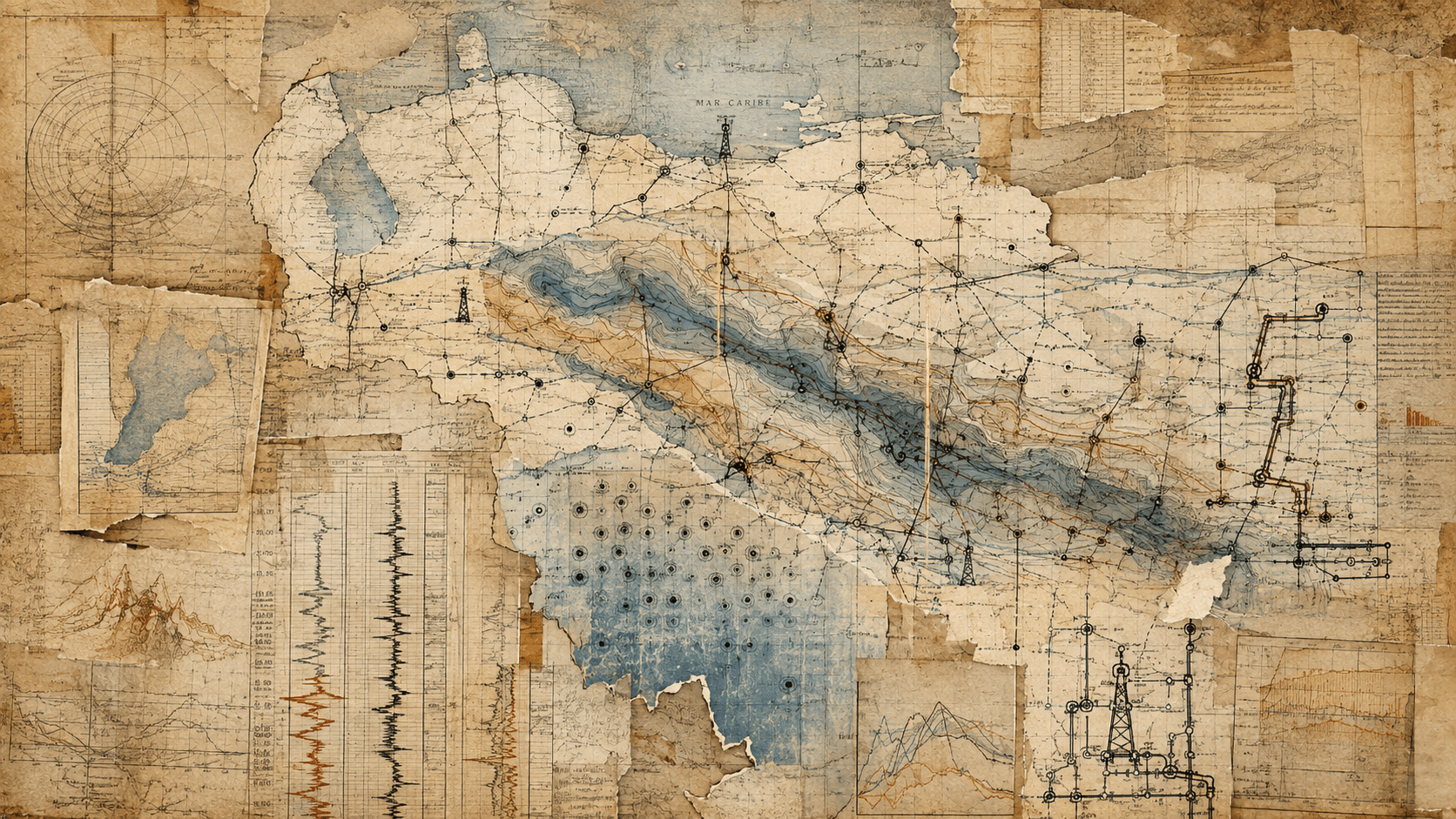
Find where compute infrastructure can actually be built.
Frontier Grid converts fragmented energy, compute, and geographic signals into constraint intelligence for real-world deployment decisions.
Capital is moving faster than physical systems can absorb it.
Compute demand is colliding with power availability, interconnection timing, grid upgrades, equipment bottlenecks, permitting, land, water, fiber, and local operating risk. Frontier Grid organizes those constraints before they become capital mistakes.
Not just electricity data
Electricity signals matter, but deployment depends on the full physical stack around them.
Not dashboard-first
The output is intelligence: briefs, node views, constraint maps, and diligence support.
Not generic market research
Every signal is classified by how it affects buildability, operating risk, or capital timing.
Request the private intelligence layer.
Private briefs for infrastructure investors and data center developers evaluating power, grid, geography, and deployment risk.
Built around the decision, not the chart.
Screen geography before capital is exposed.
Compare regions by deployment risk, power constraints, permitting friction, utility readiness, and timing. Avoid underwriting locations that look viable only on paper.
Find where capacity can actually become a site.
Evaluate the physical stack around power, connection, cooling, land, fiber, operating risk, and local execution before committing development resources.
Fragmented signals become infrastructure judgment.
The engine structures. The model challenges. The human decides. Private briefs are the intelligence layer; the public layer is positioning and distribution.
Signals
Fragmented inputs from utilities, power markets, hyperscaler capex, interconnection queues, regulatory actions, permitting, equipment supply, land, and local infrastructure.
Constraints
Signals are classified into the bottlenecks that determine whether infrastructure can be built, powered, connected, and operated.
Nodes
Constraints are grouped by geography into investable or developable infrastructure nodes.
Decisions
The engine supports briefs, rankings, diligence workflows, and operator-facing deployment views.
The constraint stack behind deployment risk.
Electricity maps are a signal layer. Frontier Grid focuses on the decision layer: what blocks deployment, what accelerates it, and where capital can realistically move.
Interconnection delay
Queue congestion, upgrade exposure, connection timing.
Power availability
Supply depth, cost position, scalability, procurement risk.
Supply chain dependency
Transformers, turbines, switchgear, cooling, long-lead equipment.
Capital misalignment
Where demand, capital, permitting, and physical systems move at different speeds.
Permitting friction
Local approval timelines, opposition, environmental complexity.
Compute flexibility
Where workloads, power strategy, and site design can adapt to constraints.
Brief 001: PJM and the 2026 Compute Constraint Stack.
A private intelligence brief, public brief, source checklist, signal base appendix, social derivatives, and release workflow — built to turn the engine into commercial intelligence.
Before committing capital, understand the constraints.
Frontier Grid helps evaluate where infrastructure can be built, powered, connected, permitted, and operated — and why some locations fail despite looking attractive.